"Discover Traditional Clothing & Cultural Fashion From Around The World"

Fabrics Used in Traditional Clothing: Silk, Cotton, Wool & More | Elvora World
Explore the most popular fabrics used in traditional clothing around the world, including silk, cotton, wool, linen, hemp, velvet, and brocade. Learn their history, characteristics, and cultural significance.
7/15/20262 min read
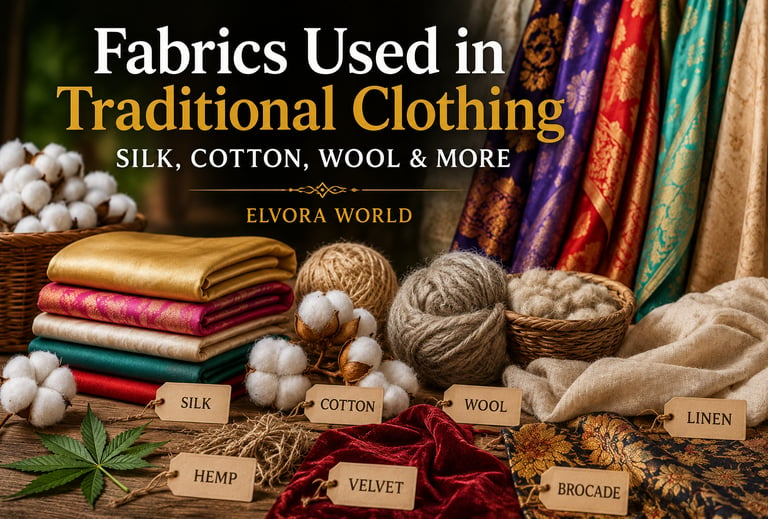
Fabrics Used in Traditional Clothing: Silk, Cotton, Wool & More
Traditional clothing is more than just fashion—it reflects a country's history, climate, culture, and identity. The choice of fabric plays a vital role in the comfort, appearance, and durability of traditional garments. Around the world, different regions have developed unique textile traditions using locally available natural fibers.
In this article, we'll explore the most popular fabrics used in traditional clothing and discover why they have remained important for centuries.
1. Silk
Silk is one of the world's oldest and most luxurious natural fibers. It is produced by silkworms and is known for its smooth texture, elegant shine, and lightweight feel.
Silk is widely used in traditional garments such as:
Indian Sarees
Japanese Kimono
Chinese Hanfu
Vietnamese Ao Dai
Thai Traditional Dress
Advantages
Soft and comfortable
Natural shine
Excellent for ceremonies and festivals
Breathable and lightweight
2. Cotton
Cotton is one of the most commonly used fabrics worldwide because of its comfort and breathability.
Traditional cotton clothing includes:
Indian Kurta
Mexican Huipil
African Dashiki
Middle Eastern Jalabiya
Advantages
Comfortable in hot weather
Easy to wash
Durable
Affordable
3. Wool
Wool is obtained from sheep and is especially popular in colder regions.
Traditional wool garments include:
Scottish Kilts
Tibetan Robes
Andean Ponchos
Himalayan Traditional Clothing
Advantages
Excellent insulation
Warm and durable
Moisture resistant
4. Linen
Linen is made from flax plants and has been used for thousands of years.
Traditional linen garments are common in:
Egypt
Ireland
Eastern Europe
Mediterranean countries
Advantages
Highly breathable
Eco-friendly
Strong natural fiber
Ideal for summer
5. Hemp
Hemp is one of the oldest eco-friendly textile fibers.
Traditional hemp clothing is found in:
China
Nepal
Bhutan
Japan
Advantages
Sustainable
Strong
Antibacterial
Long-lasting
6. Velvet
Velvet is famous for its soft, rich texture and luxurious appearance.
It is commonly used in:
Royal garments
Ottoman clothing
Indian Sherwanis
European ceremonial dresses
Advantages
Elegant appearance
Soft texture
Perfect for winter occasions
7. Brocade
Brocade is a richly decorative woven fabric often featuring gold or silver patterns.
Popular in:
Indian Banarasi Sarees
Chinese Imperial Robes
Persian Royal Clothing
Advantages
Luxurious look
Strong fabric
Ideal for weddings and ceremonies
8. Leather
Leather has traditionally been used for clothing in cold climates.
Examples include:
Native American clothing
Mongolian traditional wear
Sami traditional dress
Advantages
Durable
Weather resistant
Long-lasting
9. Fur
Fur has historically been used in extremely cold regions.
Traditional fur garments are common in:
Arctic communities
Siberia
Northern Europe
Advantages
Excellent warmth
Natural insulation
10. Bamboo Fabric
Bamboo fabric is becoming increasingly popular because it is soft and environmentally friendly.
Advantages
Sustainable
Breathable
Moisture-wicking
Comfortable
Why Fabric Choice Matters
The fabric of traditional clothing is influenced by:
Climate
Local resources
Cultural traditions
Religious practices
Social status
Craftsmanship
Each fabric tells a story about the people who created and wore it.
Conclusion
Traditional clothing is a beautiful expression of cultural heritage, and the fabrics used in these garments are just as meaningful as their designs. Whether it's the elegance of silk, the comfort of cotton, the warmth of wool, or the sustainability of hemp, every fabric reflects the history and lifestyle of its region.
By understanding these fabrics, we gain a deeper appreciation for the craftsmanship and traditions that have been preserved across generations.