"Discover Traditional Clothing & Cultural Fashion From Around The World"

The Role of Silk in Traditional Fashion
Discover the history, cultural significance, and global influence of silk in traditional fashion around the world.
6/21/20265 min read
History of Silk
The origins of silk production can be traced back to ancient China around 2700 BC, where its remarkable journey began. According to legend, it was Empress Leizu, the wife of the Yellow Emperor, who discovered silk when a cocoon fell into her tea, revealing the luxurious threads inside. This pivotal moment marked the beginning of sericulture, the intricate art of cultivating silkworms for silk production. Over the centuries, techniques evolved, leading to more sophisticated methods of silk extraction and weaving.
The process of sericulture involves several meticulously organized steps: from raising mulberry trees, which serve as food for silkworms, to carefully harvesting the cocoons. The harvested cocoons are then boiled to extract the silk fibers, which are spun into threads, forming the basis of silk fabric. The advancements in weaving techniques further enhanced the quality and variety of silk textiles, allowing for intricate patterns and colors that were highly sought after.
The importance of silk transcended mere fabric; it played a crucial role in trade, culture, and economy. The establishment of the Silk Road, an extensive network of trade routes connecting China to various parts of the globe, bolstered the silk trade significantly. This trade route facilitated not only the exchange of silk but also the sharing of ideas, art, and culture between East and West. As silk goods traveled along these routes, they influenced various cultures, contributing to the richness of traditional fashion worldwide. Historical milestones within the silk trade, including shifts in production techniques and the establishment of trading hubs, underscore silk’s profound impact on economies, particularly in Asia and Europe.
Silk in Traditional Clothing
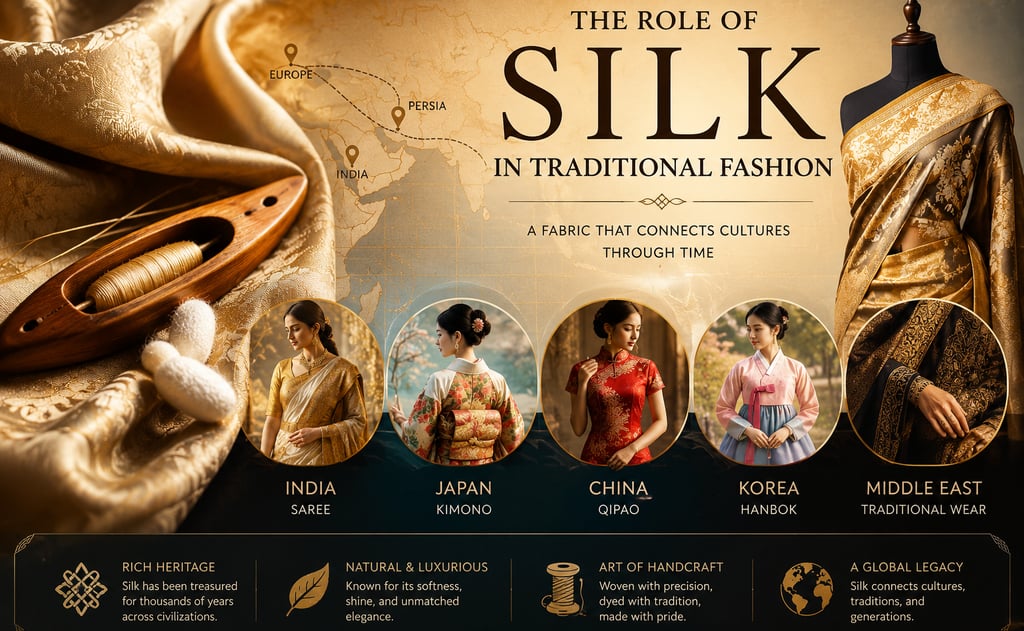
Silk has played an integral role in the development of traditional clothing across various cultures, revered for its luxurious texture and timeless elegance. Its journey began in ancient China, where it was originally produced for the elite. Over time, the production of silk spread to neighboring regions, leading to its incorporation into traditional garments worldwide.
In India, the silk sari stands as a testament to the fabric’s cultural significance. Made from handwoven silks, these garments often feature intricate embroidery and embellishments, symbolizing grace and tradition. Every region in India boasts its own unique style of sari, with specific weaving techniques and designs that celebrate local folklore and artistry. The use of silk in saris not only highlights its aesthetic appeal but also reflects its status as a symbol of femininity and elegance.
Japan's kimono is another exemplary garment where silk is celebrated. Traditionally worn during special occasions, kimonos are crafted from luxurious silk and adorned with beautiful patterns. The art of kimono-making, including the dyeing and weaving processes, emphasizes craftsmanship that has been preserved through generations. Each kimono tells a story, often depicting seasonal elements or familial heritage, showcasing silk's connection to culture and identity.
Similarly, in Korea, the hanbok incorporates silken fabrics, embodying simplicity coupled with elegance. The hanbok, characterized by its vibrant colors and clean lines, often features silk in both casual and formal attire. The gentle sheen of silk enhances the fluidity of the hanbok, making it a favored choice for festive occasions.
Throughout the Middle East, silk threads have historically been woven into garments, ranging from traditional abayas to intricate tapestries. The fabric’s luster not only elevates the grandeur of formal wear but also serves utilitarian purposes in creating suitable attire for diverse climates. Thus, silk is interwoven with the fabric of cultural expressions, enhancing traditional clothing across various societies.
Cultural Importance of Silk
Silk has held a prominent place in various cultures throughout history, symbolizing not only wealth but also a profound sense of spirituality and status. In many societies, particularly in Asia, silk is viewed as a luxury fabric that is reserved for the elite, often adorning the garments of emperors, high-ranking officials, and individuals of significant standing. This perception establishes silk as a textile that transcends mere fashion; it becomes a representation of power and prestige.
The cultural importance of silk is palpable in traditional ceremonies and festivals across different regions. For instance, in China, silk garments are integral to wedding attire, reflecting the significance of silk in marital traditions. A bride often dons a richly embroidered silk dress, which not only enhances her beauty but also embodies wealth and prosperity for the future. Similarly, in India, silk sarees are considered auspicious and are widely worn during significant life events, further emphasizing silk’s cultural relevance.
Beyond personal adornment, silk has woven itself into the fabric of art and literature, where it frequently appears as a motif symbolizing beauty, refinement, and elegance. Historical texts and poetry often reference the softness and luster of silk, denoting its desirability in artistic expressions. Additionally, religious and royal garments crafted from silk exemplify its significance; in many faiths, sacred vestments are made from silk, highlighting the fabric’s connection to spirituality and divine representation.
Thus, silk embodies a multifaceted cultural relevance that extends beyond its value as a textile. From material wealth to spiritual symbolism, and from artistic representation to ceremonial uses, silk underscores its importance across various aspects of life in multiple cultures. Its journey from ancient traditions to contemporary practices paints a picture of how silk remains intertwined with cultural identity and expression.
Silk in Modern Fashion
In recent years, there has been a notable resurgence of silk in contemporary fashion, emphasizing a blend of traditional techniques with modern design philosophies. Designers are increasingly recognizing the timeless appeal of silk, adopting it not only for its luxurious texture but also for its versatility across various clothing styles. From haute couture collections to ready-to-wear lines, silk is being integrated into a wide array of garments, such as dresses, blouses, trousers, and accessories, reaffirming its status as a staple in today's wardrobe.
Moreover, the sustainability of silk production is gaining traction as consumers become more environmentally conscious. Unlike synthetic fabrics, silk is a natural fiber that is biodegradable and often produced under more sustainable practices. Many designers are now sourcing silk from ethical producers who prioritize the welfare of silkworms and the environment, allowing for a fashionable product that aligns with sustainable values. This shift in production has not only influenced consumer preferences but has also encouraged brands to innovate in their silk offerings.
In addition, there is an emerging trend of reviving traditional silk weaves and patterns within modern apparel. Artisans are collaborating with contemporary designers to create pieces that honor historical craftsmanship while appealing to today's fashion sensibilities. This fusion highlights how the heritage of silk continues to influence modern fashion, as contemporary designs incorporate intricate motifs or traditional dyeing techniques, effectively bridging the gap between the old and the new. As such, the continued appreciation for silk underscores its enduring significance within the fashion landscape and reflects a broader appreciation for craftsmanship and cultural heritage in modern style.
Conclusion
Throughout this exploration of the role of silk in traditional fashion, we have examined its profound impact across various cultures and historical contexts. Silk, a material synonymous with luxury and elegance, has served as a foundation for traditional attire in regions from Asia to Europe. Its unique properties, such as durability, sheen, and comfort, have made it a preferred choice for garments that not only enhance beauty but also tell stories of cultural significance.
As we discussed, the intricate weaving techniques and dyeing processes associated with silk production have been passed down through generations, preserving artisanal craftsmanship. These traditional methods reflect the diverse cultural narratives and identities that silk embodies. Moreover, the ways in which silk is used in clothing often carry symbolic meanings, from denoting social status to evoking regional pride.
The connection between modern fashion and ancient traditions is vividly illustrated through the continued use of silk. Designers today draw inspiration from the vivid patterns and rich textures that characterize traditional garments, bridging the gap between contemporary fashion and historical influences. This synergy not only revitalizes cultural heritage but also demonstrates the timeless appeal of silk as a fabric that transcends trends.
Ultimately, the legacy of silk in traditional fashion is one of beauty, refinement, and deep cultural resonance. It serves as a reminder of the artistry and history that inform our apparel choices today. As silk continues to be celebrated and integrated into both traditional and modern wardrobes, its role as a cultural artifact and symbol of heritage remains unyielded, ensuring that its legacy endures for future generations.
Elvora World explores traditional clothing, cultural fashion, and heritage garments from around the world. Discover the history, craftsmanship, and cultural significance of traditional attire across different
Explore our Countries, Dresses, and Fashion History sections to learn more about traditional clothing around the world.