"Discover Traditional Clothing & Cultural Fashion From Around The World"

The Japanese Kimono: History, Styles & Traditions
Discover the timeless beauty of the Japanese Kimono. Explore its history, traditional styles, cultural significance, fabrics, and modern influence in Japanese fashion.
TRADITIONAL CLOTHING
kishore kumar sidar
7/13/20262 min read
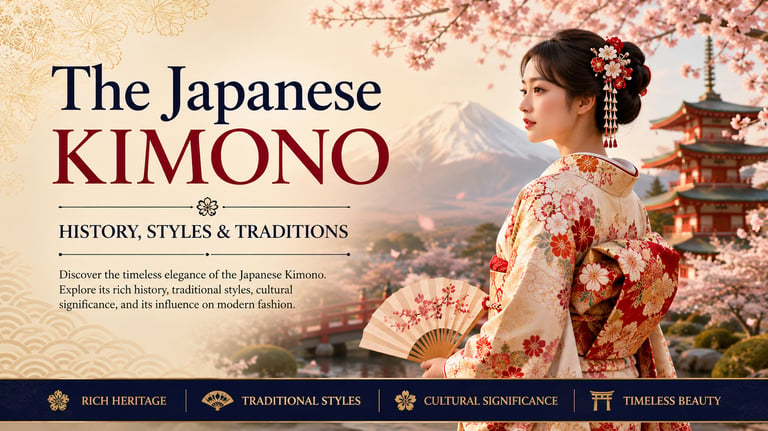
The Japanese Kimono: History, Styles & Traditions
Introduction
The Japanese Kimono is one of the world's most elegant and recognizable traditional garments. Worn for centuries, the kimono represents Japan's rich cultural heritage, artistic craftsmanship, and deep respect for tradition. Even today, it remains an important part of festivals, weddings, tea ceremonies, and other special occasions.
The History of the Kimono
The kimono has a history spanning more than a thousand years. It evolved during Japan's Heian Period (794–1185) and gradually became the national dress of Japan. Over time, different styles, colors, and fabrics reflected social status, age, and important life events.
Traditional Kimono Styles
Japan has many types of kimonos, including:
Furisode
Yukata
Tomesode
Houmongi
Komon
Iromuji
Each style is designed for different occasions and traditions.
Fabrics Used
Traditional kimonos are crafted using high-quality fabrics such as:
Silk
Cotton
Linen
Wool
Modern synthetic fabrics
Silk kimonos are especially admired for their beauty and luxurious feel.
Colors and Symbolism
Kimono colors and patterns often carry symbolic meanings.
For example:
Red represents happiness and celebration.
White symbolizes purity.
Gold reflects prosperity and elegance.
Floral patterns celebrate the beauty of nature.
Seasonal designs are also commonly used throughout the year.
When Is a Kimono Worn?
The kimono is commonly worn during:
Weddings
Tea ceremonies
Cultural festivals
Coming-of-Age Day
Graduation ceremonies
Traditional performances
Although everyday clothing in Japan has become modern, the kimono remains an important cultural symbol.
The Modern Influence of the Kimono
Today, fashion designers around the world draw inspiration from the kimono's graceful silhouette, elegant sleeves, and artistic patterns. The kimono continues to influence both traditional and contemporary fashion.
Interesting Facts
The word "Kimono" simply means "thing to wear."
Traditional kimonos are often handmade.
A formal kimono can take months to create.
Wearing a kimono correctly requires skill and careful dressing.
Conclusion
The Japanese Kimono is much more than traditional clothing—it is a symbol of history, elegance, and cultural identity. Its timeless beauty continues to inspire people around the world, making it one of Japan's greatest cultural treasures.
Frequently Asked Questions (FAQs)
1. What is a Japanese Kimono?
A kimono is Japan's traditional garment, known for its elegant design and cultural significance.
2. When is a kimono worn?
It is worn during weddings, festivals, tea ceremonies, graduations, and other special occasions.
3. What fabric is used for kimonos?
Traditional kimonos are commonly made from silk, cotton, linen, or wool.
4. Is the kimono still popular today?
Yes. It remains an important part of Japanese culture and is also admired worldwide.
5. What makes the kimono unique?
Its elegant design, symbolic patterns, craftsmanship, and centuries-old cultural heritage make it unique.